Bills Must Be Paid Stamina Management Guide
Learn how Bills Must Be Paid stamina works, when runs end, how to extend active time, and how stamina choices affect bill payments.
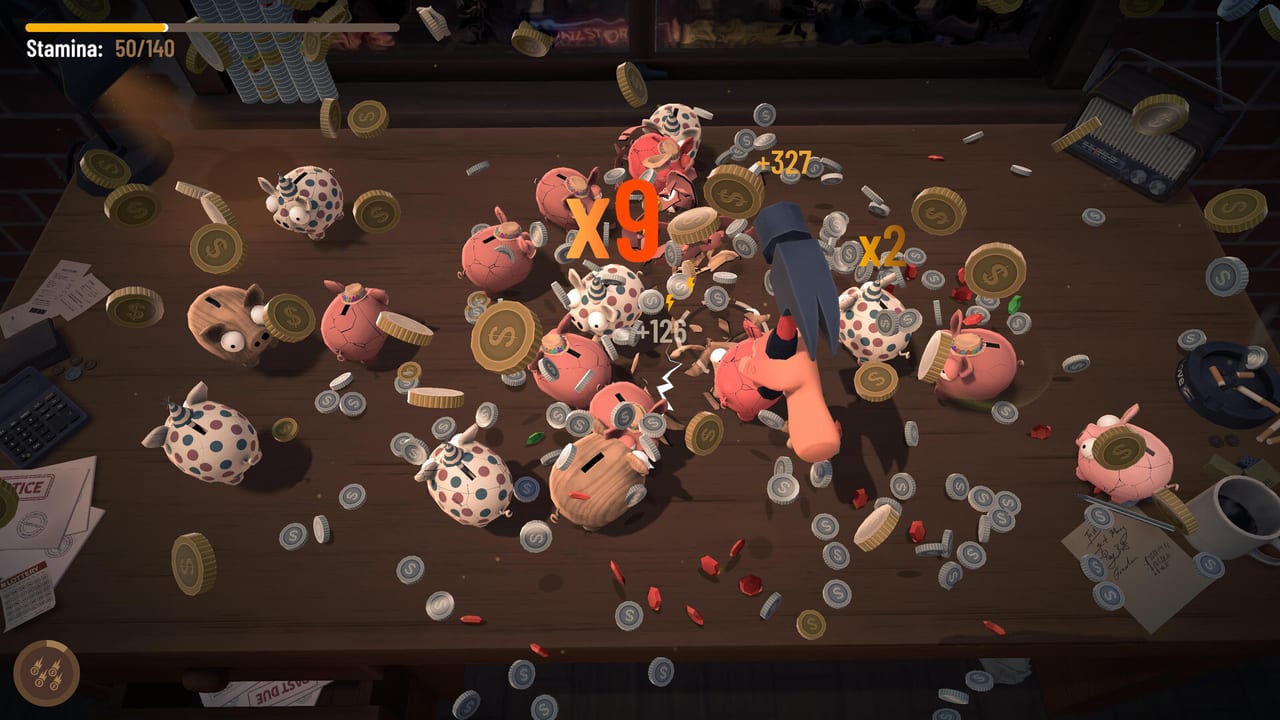
Stamina is the hidden clock
Bills Must Be Paid looks like a bill timer game, but stamina is the other clock that ends most runs. Every hammer swing drains your hand. When stamina runs out, the active phase stops and you return to upgrade and payment decisions. That means you are always spending two resources at once: time on the bill timer and energy in your stamina bar.
New players often focus on coin totals and forget that a long chase across the desk can burn stamina without paying back. A piggy that looks valuable but requires ten seconds of pursuit may produce less total income than three easy targets smashed in the same window. Stamina management starts with treating movement as a cost, not free positioning.
How stamina ends a run
The demo and full game both describe smashing as an active incremental loop. You hover the hammer, swings happen automatically, and stamina drains while you are working. When the bar empties, the smashing phase ends regardless of how many piggies remain on the desk. That design forces short, focused bursts instead of endless clicking.
Because runs are short, stamina creates a natural rhythm. Earn during the active window, then spend downtime on upgrades, bill checks, and perk choices. If your stamina always dies before you reach a meaningful bill payment, the problem is usually build order, not bad luck. Read Best Early Upgrades alongside this page.
Early stamina priorities
The safest early investments are upgrades and perks that extend usable time or reduce wasted swings. Grip strength, wrist control, and practical hammer comfort all help because they convert more visible targets into coins before the bar runs dry. Stamina perks after bill payment can be stronger than another income upgrade if your last three runs ended with money left on the desk but no energy to collect it.
Avoid the trap of buying only damage upgrades when you cannot stay active long enough to use them. High burst income means nothing if the run ends before the burst arrives. Consistency upgrades often feel boring, but they buy time, and time is what turns bill pressure into manageable decisions.
Routing piggies with stamina in mind
Piggy routing and stamina routing are the same problem. Chasing a Tourist across the full desk may look exciting, but if three Normalito targets spawn near your hammer path, the local cluster usually wins on total coins per stamina point. The Piggy Types guide explains when a moving target is worth the movement tax.
Use a simple rule: if a target takes you away from two or more reliable spawns, skip it unless the bill timer is safe and the payout is clearly above average. Woody and Taurus targets reward patience because they stay put. El Loco and Tourist targets punish stamina-heavy zigzag movement unless your hammer radius or speed already supports the chase.
Stamina and bill timing together
Stamina and bills interact constantly. A bill in green state gives you room to finish the current stamina window cleanly, buy one upgrade, and pay without panic. A bill in yellow state means you should stop luxury chases and path for fast, reliable income. A bill in red state means pay first even if stamina remains, because collector pressure destroys the value of extra swings.
The How to Pay Bills page covers payment states in detail. From a stamina perspective, the key idea is simple: do not spend your last twenty percent of stamina on a speculative jackpot when a bill is about to punish delay. Finish the safe income, pay, pick a stamina or income perk, then decide whether the next run should be longer or richer.
Hammers, desk gadgets, and full-game stamina tools
Hammer choice affects stamina efficiency. Fast hammers with wide radius convert dense spawns quickly. Crit hammers with small radius demand accuracy and can waste stamina on misses. After demo patch v0.2.7, Toy Hammer speed and Ultracrit radius tuning made these trade-offs clearer. See the Hammer Tier List for tool-specific notes.
The full game adds desk gadgets and prestige rings or bracelets that can change starting stamina or recovery patterns. Those systems do not remove the core rule. They give you more ways to extend active time after you understand why runs were ending. Read Desk Gadgets and Prestige System once the full release systems are unlocked.
A practical stamina checklist
Before each run, ask four questions. Can I reach the next bill with my current income rate? Does my hammer convert nearby spawns without over-chasing? Do I have a perk or upgrade that adds time if this run runs long? If stamina ends early again, is the fix routing, tool choice, or payment timing?
Use the Bill Planner Tool to turn those questions into a quick pre-run habit. Stamina management is not about playing slower. It is about spending energy where coin return is highest before the hand gives out.
Frequently Asked Questions
Quick answers grounded in the current demo and launch details.
What happens when stamina runs out in Bills Must Be Paid?
The active smashing phase ends and you return to upgrade, bill, and perk decisions even if piggies remain on the desk.
What is the best early fix for short runs?
Consistency upgrades such as grip, wrist control, and practical hammer comfort usually extend runs more reliably than pure damage spikes.
Should I chase moving piggies when stamina is low?
Usually no. Prioritize nearby reliable targets unless the bill timer is safe and the moving piggy payout clearly beats local income.
Do desk gadgets change stamina planning?
Yes in the full game. Gadgets and prestige jewelry can modify recovery or efficiency, but routing and bill timing still decide whether extra time helps.